High in the Javakheti highlands, a golden age queen ordered thousands of rooms to be hollowed from a volcanic cliff face, creating a city that would defy time, earthquakes, and invaders alike. Vardzia is not merely a ruin — it is a living testament to medieval Georgia's extraordinary ambition and faith.
Vardzia's story begins in the reign of King George III of Georgia, who initiated construction of the cave complex around 1156 CE along the left bank of the Mtkvari River in the Samtskhe region. The site, carved into the volcanic Mount Erusheti, was strategically chosen to serve as both a fortified refuge and a symbol of Georgian power against persistent Seljuk Turkish incursions from the south. The sheer scale of the ambition was staggering: workers chiseled directly into the cliff face to create a labyrinthine network of chambers, tunnels, and galleries that would eventually span thirteen stories and stretch across nearly 500 metres of rock.
Construction accelerated dramatically under George III's celebrated daughter, Queen Tamar, who ruled Georgia from 1184 to 1213 CE during what historians regard as the nation's medieval golden age. Tamar transformed Vardzia from a military stronghold into a grand monastic complex and royal retreat, commissioning the central Church of the Dormition — the spiritual heart of the entire city — which was consecrated in 1185. At its height, Vardzia housed approximately 3,000 monks across around 6,000 rooms, including churches, chapels, libraries, wine cellars, pharmacies, and a sophisticated irrigation system that watered terraced gardens along the river valley below.
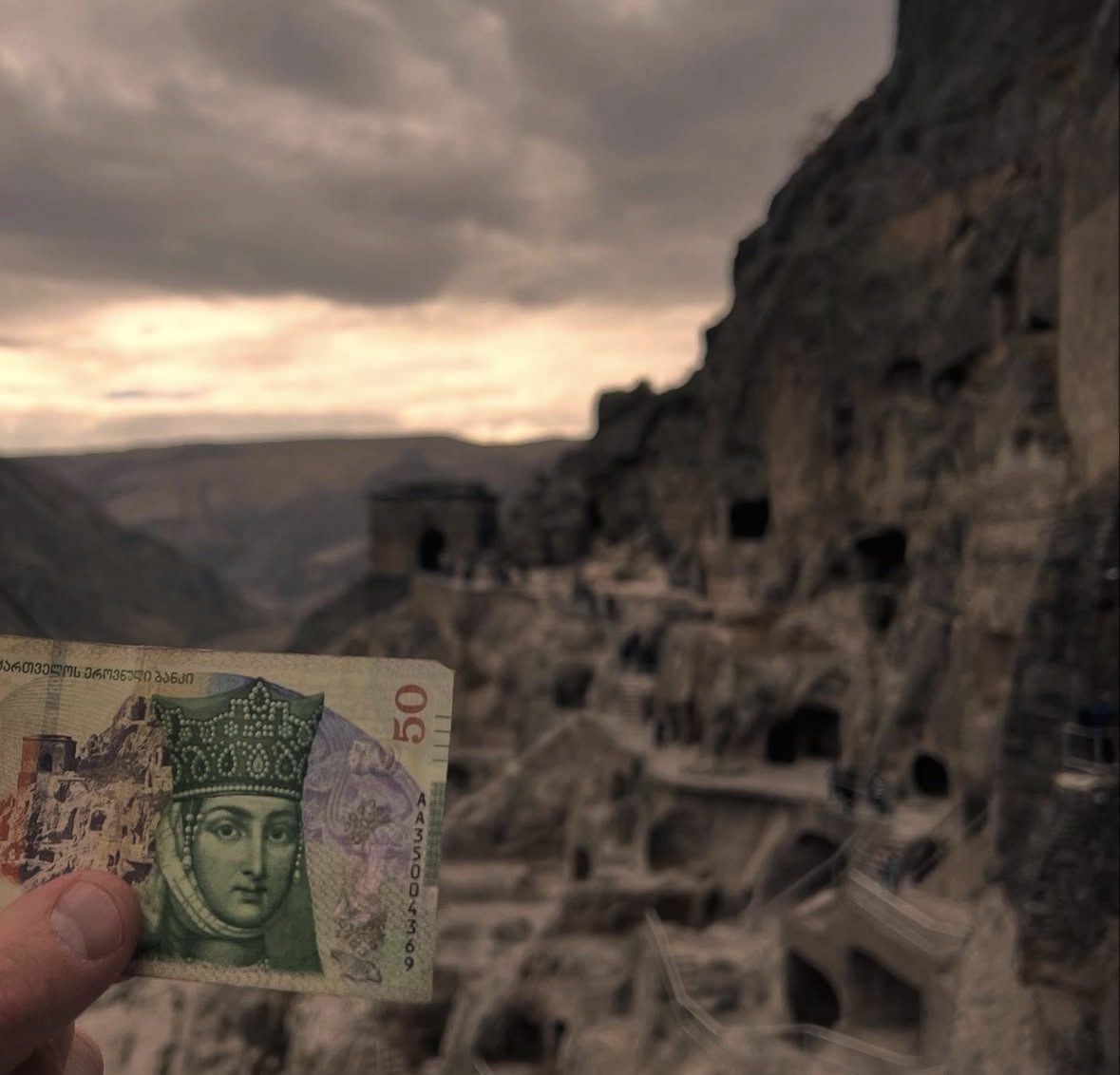
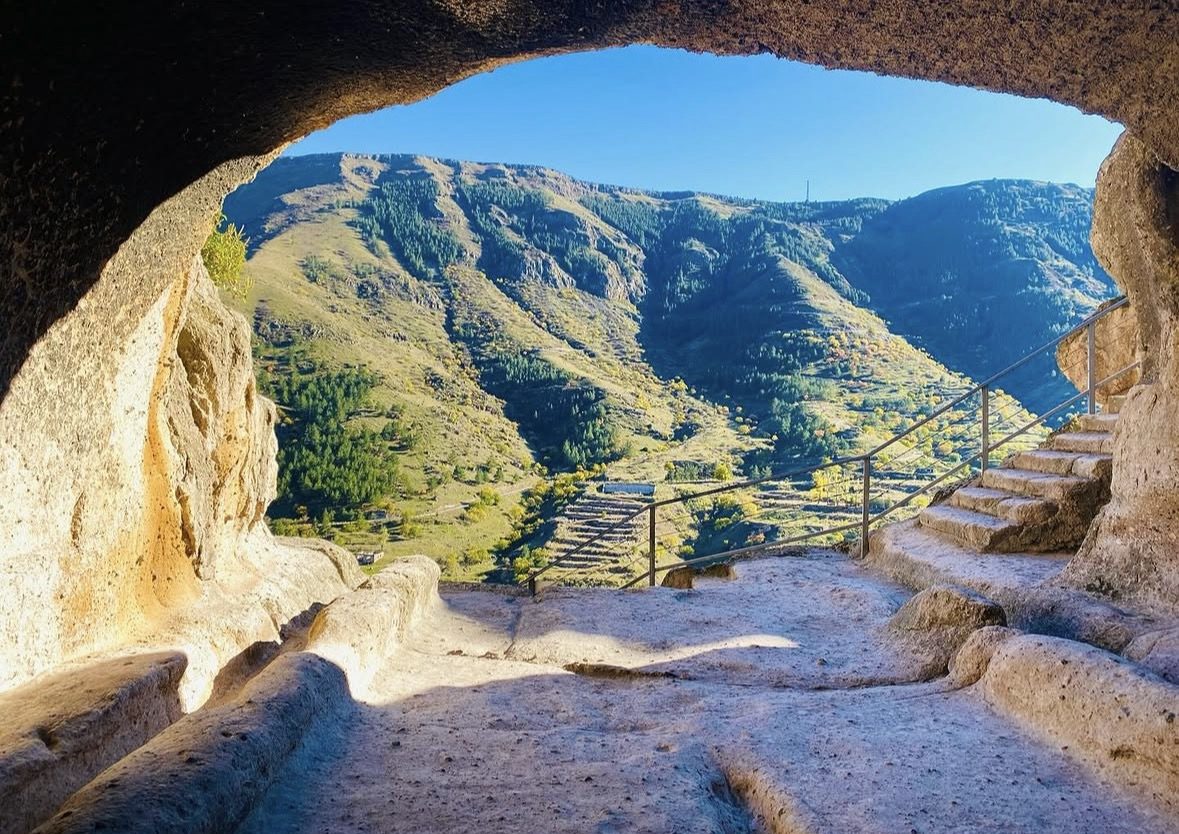
The engineering ingenuity behind Vardzia remains astonishing even by modern standards. The cave complex was designed with an intricate system of concealed tunnels that allowed its monastic inhabitants to move between levels invisibly, drawing water from a natural spring hidden deep within the mountain. A sophisticated pipeline carved from stone carried fresh water throughout the complex, and interconnecting passages linked living quarters, chapels, and communal halls in a seamless vertical city. The outer facade of the cliff was originally almost entirely concealed, making Vardzia functionally invisible to approaching armies — a masterpiece of medieval defensive architecture built not with walls but with secrecy.
The Church of the Dormition stands as the artistic crown of Vardzia, its interior walls adorned with frescoes painted during the reign of Queen Tamar herself. Among the most treasured is a portrait of Tamar alongside her father George III — one of the very few surviving contemporary likenesses of the queen — painted in vivid Byzantine style with golden halos and imperial regalia. These 12th-century frescoes have survived centuries of exposure, earthquake damage, and Persian raids to remain largely legible today, offering an irreplaceable window into the aesthetic and religious sensibilities of Georgia's most celebrated royal era.
Wine production was an integral and surprisingly sophisticated aspect of life at Vardzia. Archaeological excavations have uncovered large carved stone wine vats called marani, many still intact within the cave chambers, reflecting Georgia's ancient 8,000-year-old winemaking tradition. The monks cultivated vineyards on the terraced slopes above the river, produced wine using the traditional qvevri clay vessel method, and stored it in the cool, stable temperatures of the cave cellars. This combination of spiritual devotion and agricultural self-sufficiency made Vardzia a remarkably complete and self-sustaining monastic community, capable of housing and feeding its population entirely within the mountain.
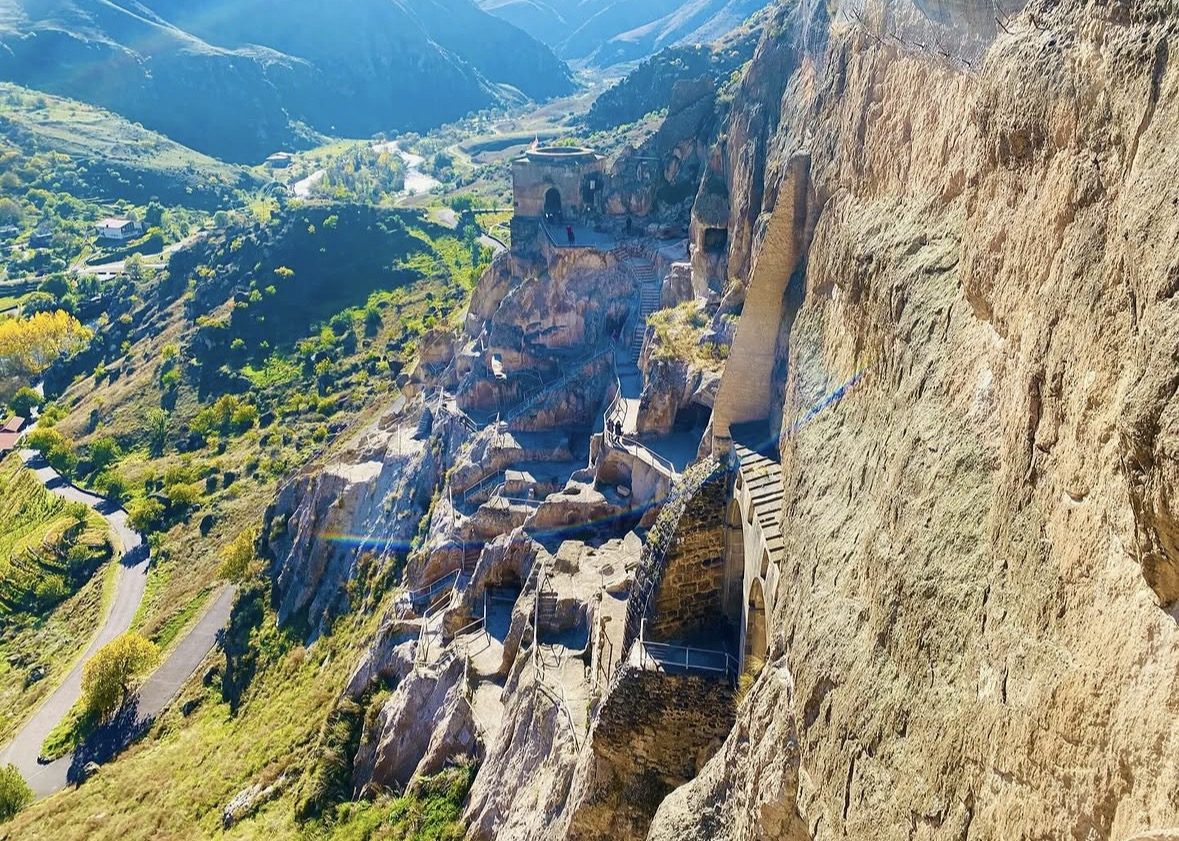
Vardzia's golden era came to a sudden and violent end in 1283 CE when a massive earthquake struck the Samtskhe region, collapsing the outer face of the cliff and exposing the formerly hidden cave city to the elements and to enemies. What had once been an impregnable secret fortress became an open wound in the mountainside. The disaster stripped away approximately two-thirds of the original complex, and while monastic life continued in the surviving chambers, Vardzia's strategic value as a concealed refuge was permanently destroyed. The exposed rooms quickly became vulnerable to the waves of invasion that would plague the region over the following centuries.
In 1551, Shah Tahmasp I of the Safavid Persian Empire launched a devastating invasion of Georgia, sacking Vardzia and massacring or enslaving much of its monastic community. The Persians stripped the complex of its valuables, damaged its frescoes, and left the site largely abandoned. A brief revival occurred under the Ottoman Empire's shifting influence in the region, but Vardzia never regained its former population or prestige. By the 17th century, the once-thriving monastic city of thousands had been reduced to a handful of monks clinging to survival amid the carved chambers, their numbers insufficient to maintain the vast complex or restore its damaged artwork.
Russian Imperial expansion into the South Caucasus in the early 19th century brought new scholarly attention to Vardzia. Following Russia's annexation of the Samtskhe region in 1828, Russian and Georgian historians began systematically documenting the site, recognizing its extraordinary historical and artistic significance. Archaeological work intensified during the Soviet era, when restoration efforts stabilized several key structures and protected the surviving frescoes. It was during this period that Vardzia was formally recognized as one of Georgia's most important cultural monuments, attracting the first organized tourism and establishing the preservation frameworks that continue to protect the site today.
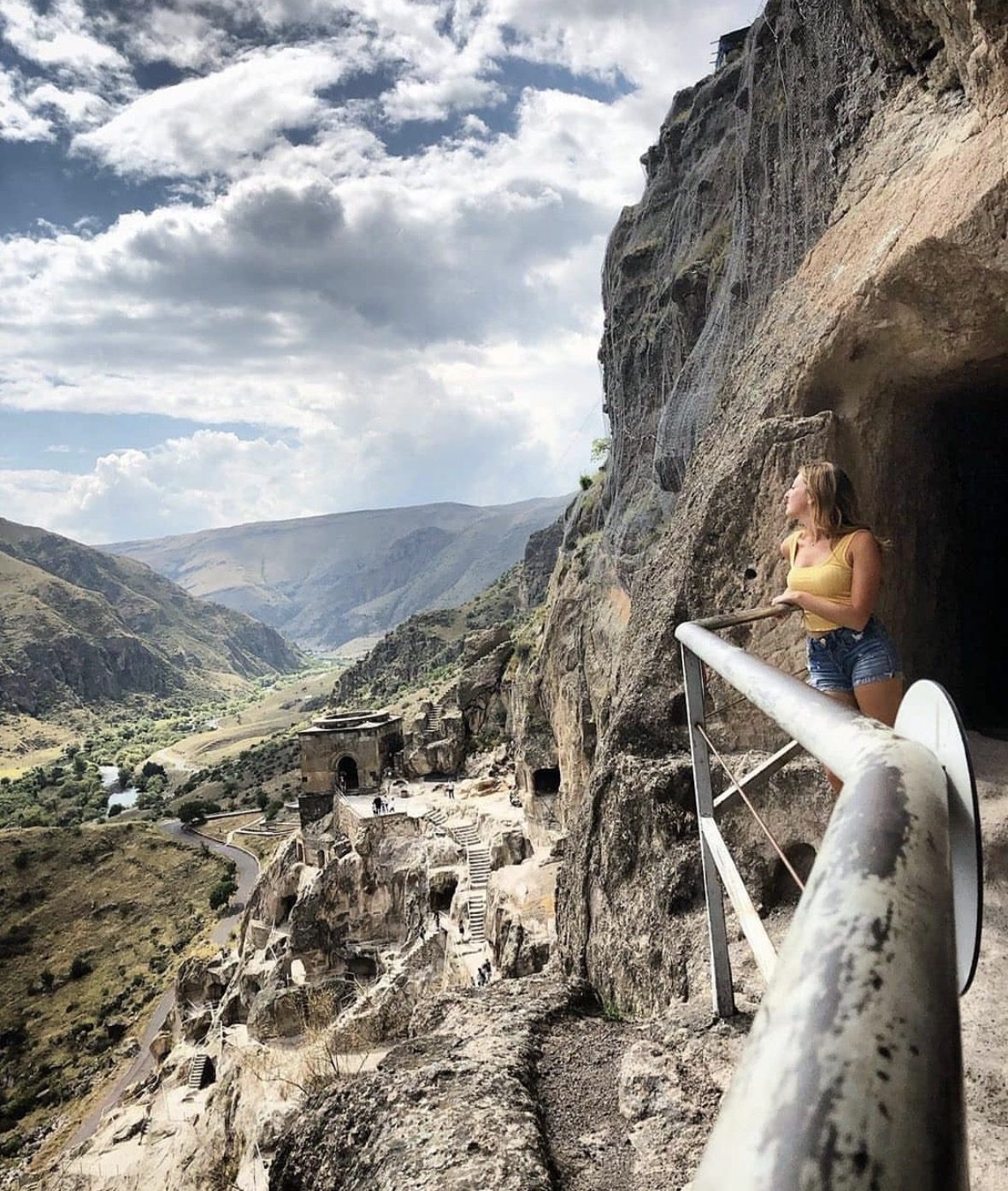
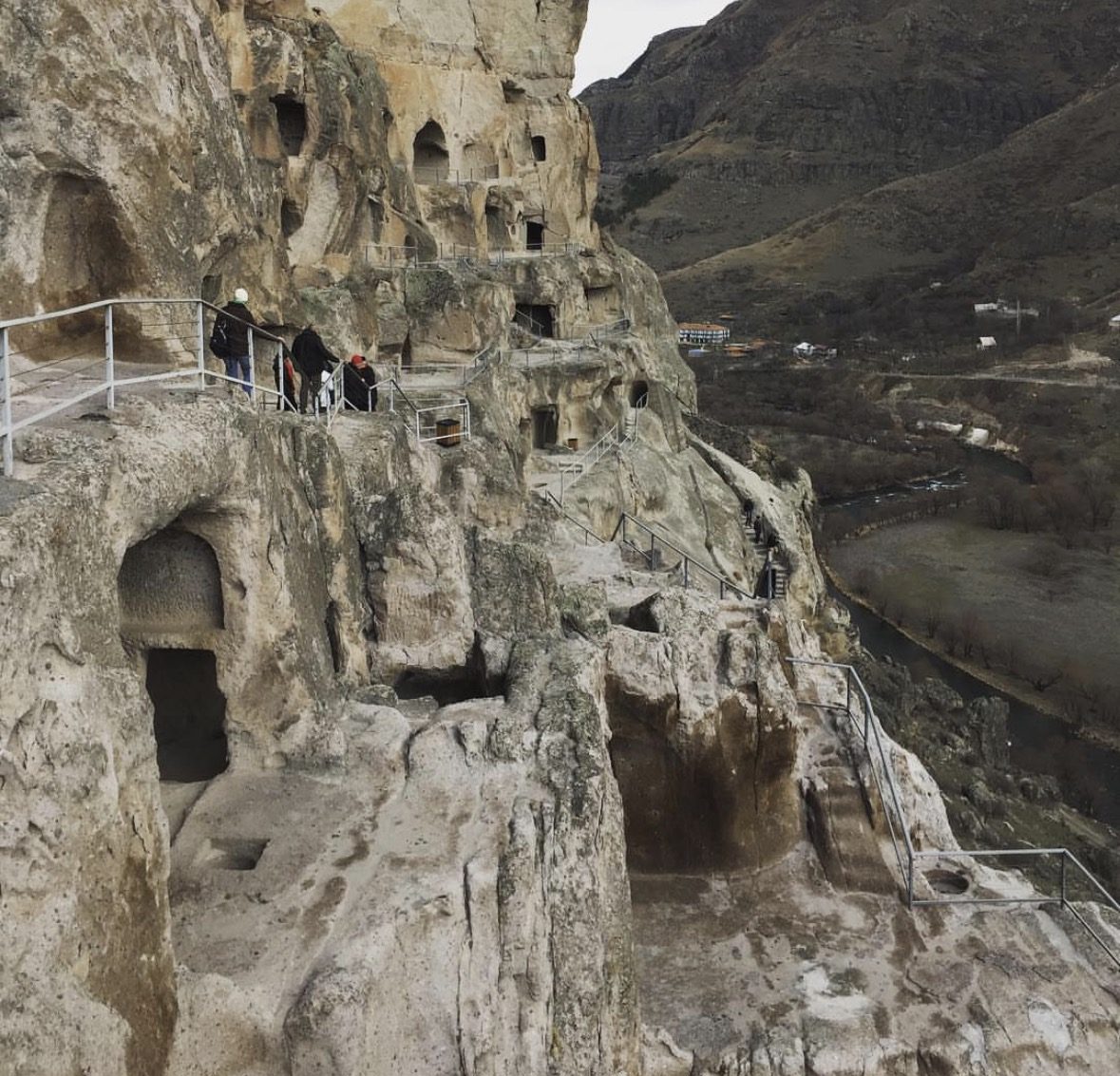
Remarkably, Vardzia is not merely a museum — it remains an active Orthodox Christian monastery to this day. A small community of Georgian Orthodox monks continues to inhabit a portion of the ancient cave complex, conducting services in the Church of the Dormition and maintaining the spiritual tradition that Queen Tamar established nearly nine centuries ago. Visitors who arrive at dawn may hear the deep resonance of liturgical chanting drifting from the carved church, an extraordinary echo of medieval Georgia that transforms the experience from sightseeing into something far more profound. The monastery is managed jointly by the Georgian Orthodox Church and the Georgian National Museum.
Today, Vardzia receives hundreds of thousands of visitors annually, accessible via a scenic drive through the dramatic Mtkvari River gorge from the nearby town of Akhaltsikhe and its restored Rabati Castle. The site offers a well-maintained network of walkways and stairs through the cave levels, with the Church of the Dormition's frescoes viewable up close in conditions rarely permitted at comparable heritage sites. Whether you are drawn by medieval history, Byzantine art, the legend of Queen Tamar, or simply the jaw-dropping spectacle of a city carved into a cliff, Vardzia rewards every traveler with an encounter unlike anything else in the Caucasus — or indeed, the world.
Ready to Experience It Yourself?
Vardzia is best experienced with an expert guide who can bring its layered history, hidden tunnels, and stunning frescoes to life. Browse our handpicked selection of tours departing from Tbilisi and Akhaltsikhe, designed to give you the most immersive and informed visit possible. Book your place today and step inside one of the ancient world's most breathtaking surviving monuments.
Book Your Tour Now